
Become a member
Shifts, with no small print
A shift is 2-2.5 hours every 4 weeks, not every week. And if that doesn’t suit you, there are two alternatives that count exactly the same.
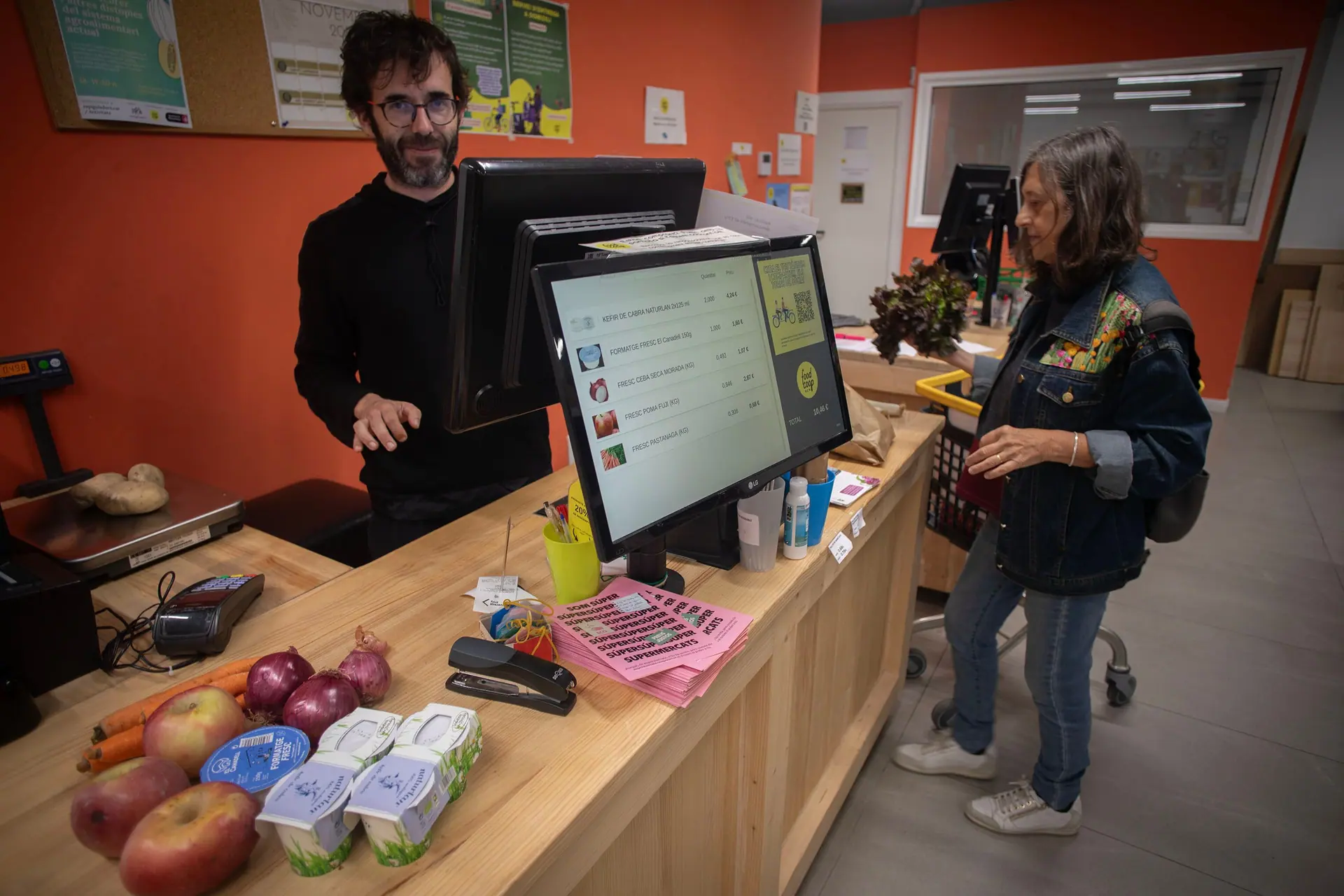
Every 4 weeks: what that means
You do a shift, and the next one is 4 weeks later. Over a year that’s thirteen shifts of 2-2.5 hours: around thirty hours in all. Spread out like that, it’s less time than many people spend doing their shopping.

What you do
- Restocking the shelves
- Working the till
- Taking in deliveries and putting them away
- Tidying and cleaning the shop floor
- Helping members and anyone in for the first time
- Weighing out and preparing the refill goods
You don’t need any experience. You do your first shift with someone who already knows the ropes, and there’s always a member of the paid staff on the shop floor.
Fixed or floating: you choose
-
Fixed shift
Always the same day of the week and the same time slot. If your routine is steady, it’s the easiest: you can stop thinking about it.
-
Floating shift
You pick the day each cycle, depending on how your month looks. It suits you if you work shifts or your diary keeps changing.
-
Tandem shift
If you live with another member, the two of you can share one shift between you.
What if I can’t make it one month?
Can I move a shift to another day?
Yes. You can move it 13 times a year, no explanations needed.
Can I swap it with another member?
Yes. It’s what most people do when something comes up: swap with someone and that’s that.
What if I can’t do my shift because I forget, I’m ill or something comes up?
Tell the coordinator at least 24 hours before, or swap with another member in the shift-swap group. If you give notice in time, you have 4 weeks to make it up. If you don’t, it counts as an absence and you have two to make up.
Are there exceptions?
Yes. If you’re over 65, have reduced mobility or an illness, or are on maternity or paternity leave, shifts aren’t compulsory. Other situations are looked at case by case: write to etpucajudar@foodcoopbcn.cat.
The alternative: a working circle
If shifts on the shop floor are what you find hard, but you’re keen and have the time, you can give the same hours to one of the circles that keep the co-op running. Much of the work is done from home.
-
Community and care
Welcoming new members, getting people involved and the life of the co-op.
-
Premises
Looking after the space and improving it.
-
Operations
Running the shop day to day and organising the shifts.
-
Buying
Working with producers and choosing what we stock.
-
Finance
Accounts, cash flow and keeping to the budget.
-
IT
Systems, the online shop and our internal tools.
-
Governance
Assemblies, statutes and how we make decisions.
-
Communication
Social media, the website, the newsletter and the press.
-
Co-operation
Agreements with other co-ops and organisations, and the perks they bring members.
-
Shop
Looking after the shop itself: shelves, stock and what it’s like to shop here.
The other alternative: the fee
If you can’t give any time right now, you pay a quarterly fee and keep every single member benefit: the 12% discount, the online shop and the vote at the assembly.
Already a member? Everything you need day to day is in one place.
Still unsure about shifts?
Come to a Cafè FoodCoop, our monthly open café, to find out about the project and ask your questions before you decide anything.